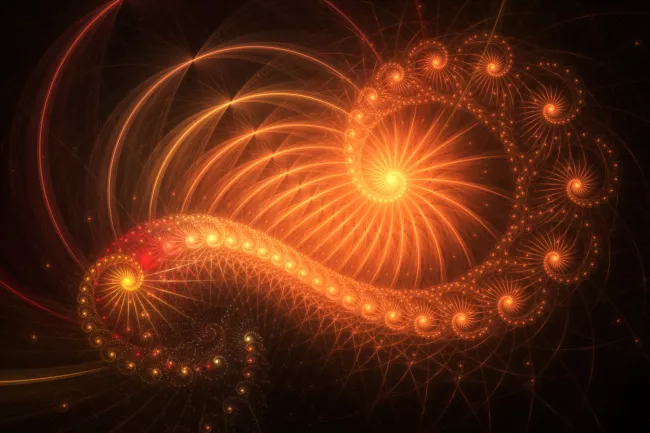
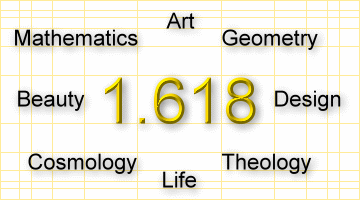
What makes a single number so interesting that ancient Greeks, Renaissance artists, a 17th century astronomer and a 21st century novelist all would write about it? It's a number that goes by many names. This “golden” number, 1.61803399, represented by the Greek letter Phi, is known as the Golden Ratio, Golden Number, Golden Proportion, Golden Mean, Golden Section, Divine Proportion and Divine Section. It was written about by Euclid in “Elements” around 300 B.C., by Luca Pacioli, a contemporary of Leonardo Da Vinci, in "De Divina Proportione" in 1509, by Johannes Kepler around 1600 and by Dan Brown in 2003 in his best selling novel, “The Da Vinci Code.” With the movie release of the “The Da Vinci Code”, the quest to know Phi was brought even more into the mainstream of pop culture. The allure of “The Da Vinci Code” was that it creatively integrated fiction with both fact and myth from art, history, theology and mathematics, leaving the reader never really knowing what was truth and …

"I had a shining joke about Golden Ratio but I am afraid you have already seen it everywhere!"
@confusedcoder1
In mathematics, two quantities are in the golden ratio if their ratio is the same as the ratio of their sum to the larger of the two quantities. Phi can be defined by taking a stick and breaking it into two portions. If the ratio between these two portions is the same as the ratio between the overall stick and the larger segment, the portions are said to be in the golden ratio. This was first described by the Greek mathematician Euclid, though he called it "the division in extreme and mean ratio," according to mathematician George Markowsky of the University of Maine.
You can also think of phi as a number that can be squared by adding one to that number itself, according to an explainer from mathematician Ron Knott at the University of Surrey in the U.K. So, phi can be expressed this way: [ phi^2 = phi + 1 ]


It is an irrational number like pi and e, but 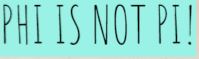 meaning that just it's terms go on forever after the decimal point without repeating.
Over the centuries, a great deal of lore has built up around phi, such as the idea
that it represents perfect beauty or is uniquely found throughout nature. But much of that has no basis in reality.
meaning that just it's terms go on forever after the decimal point without repeating.
Over the centuries, a great deal of lore has built up around phi, such as the idea
that it represents perfect beauty or is uniquely found throughout nature. But much of that has no basis in reality.
Check out amazing GEOGEBRA site with cool try-ons!!
Ps.Don't forget to Zoom!!
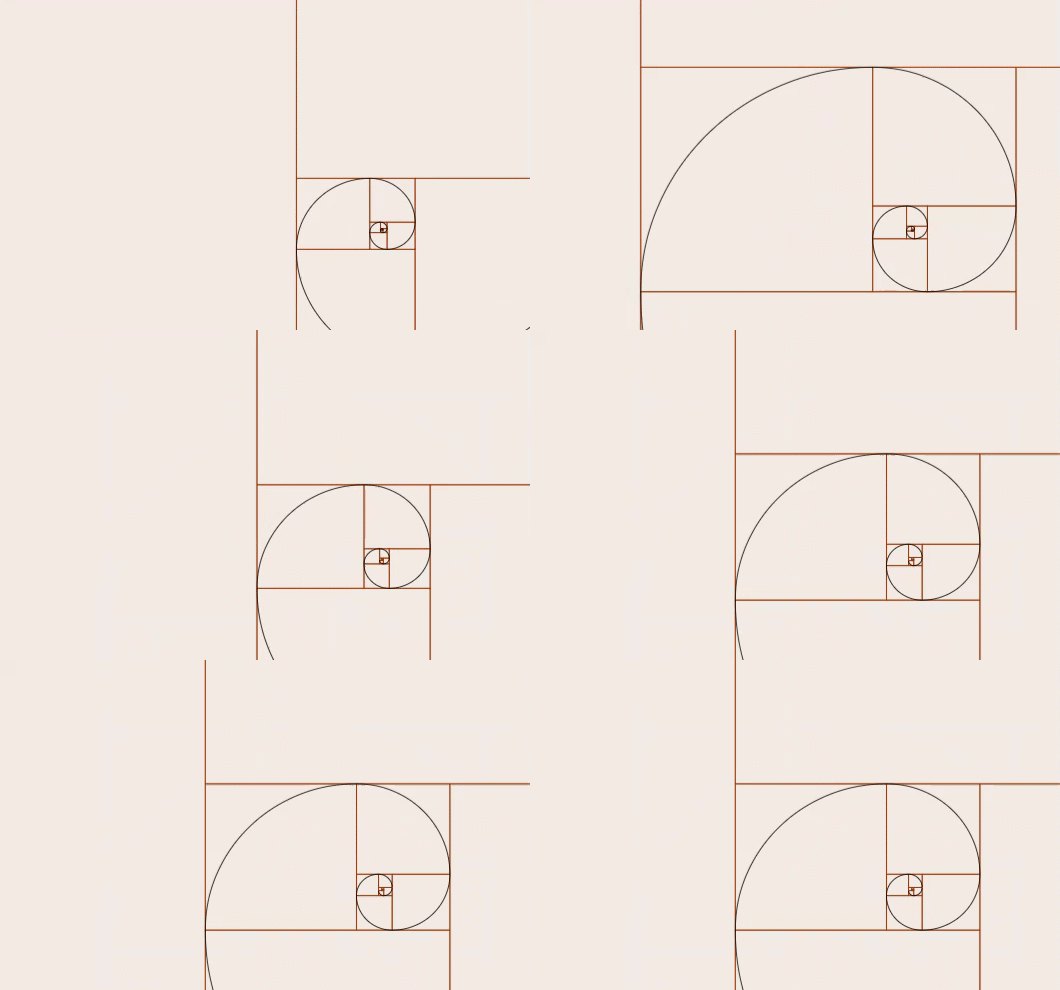

Phi is closely associated with the Fibonacci sequence, in which every subsequent number in the sequence is found by adding together the two preceding numbers. This sequence goes 0, 1, 1, 2, 3, 5, 8, 13, 21, 34 and so on. It is also associated with many misconceptions. By taking the ratio of successive Fibonacci numbers, you can get closer and closer to phi. Interestingly, if you extend the Fibonacci sequence backward — that is, before the zero and into negative numbers — the ratio of those numbers will get you closer and closer to the negative solution, little phi −0.6180339887…

In Quadratic form, we have (1 + √5)/2 and (1 - √5)/2. The positive irrational number is 1.6180339887… and this is generally what's known as PHI.
The negative solution is -0.6180339887... and is sometimes known as little PHI. Another elegant way to represent PHI is as follows:
5 ^ 0.5 * 0.5 + 0.5
This is five raised to the one-half power, times one-half, plus one-half.

As evidenced by the names for the number, such as the divine proportion and golden section,
many wondrous properties have been attributed to PHI.
PHI is found in many ancient structures like Pyramids of Giza, Parthenon sculptures etc.
Attempts to find PHI in the human body succumbs to some fallacies.
But with so many bones and so many points of interest on those bones,
probably there would be at least a few golden ratios elsewhere in the human skeletal system.
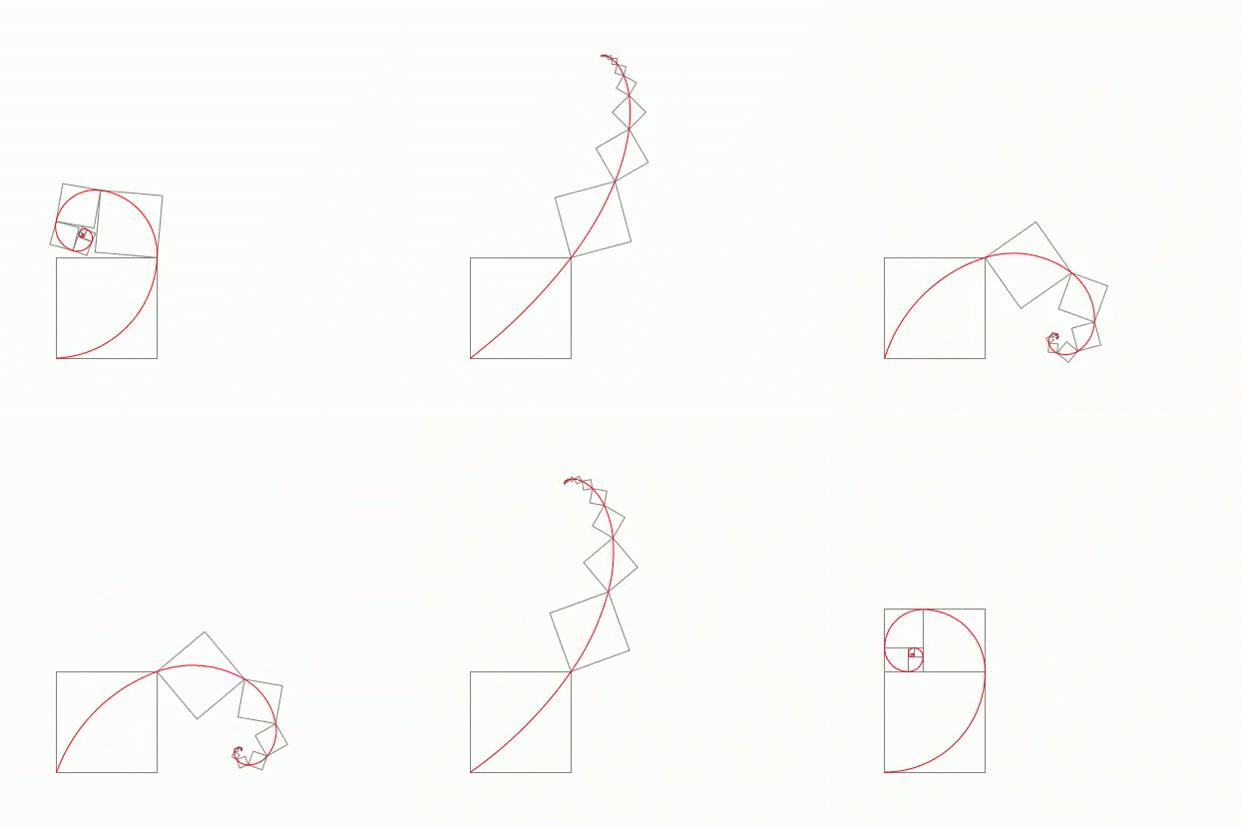
Shells and snails and various prints, also reflect PHI attributes.
Flower petals often come in Fibonacci numbers, such as five or eight,
and pine cones grow their seeds outward in spirals of Fibonacci numbers.
While phi is certainly an interesting mathematical idea,
it is we humans who assign importance to things we find in the universe.
An advocate looking through phi-colored glasses might see the golden ratio everywhere.
But it's always useful to step outside a particular perspective and ask whether the world
truly conforms to our limited understanding of it.